Catalogue · Isothermal molecular cards · ISO-GIA-TRF
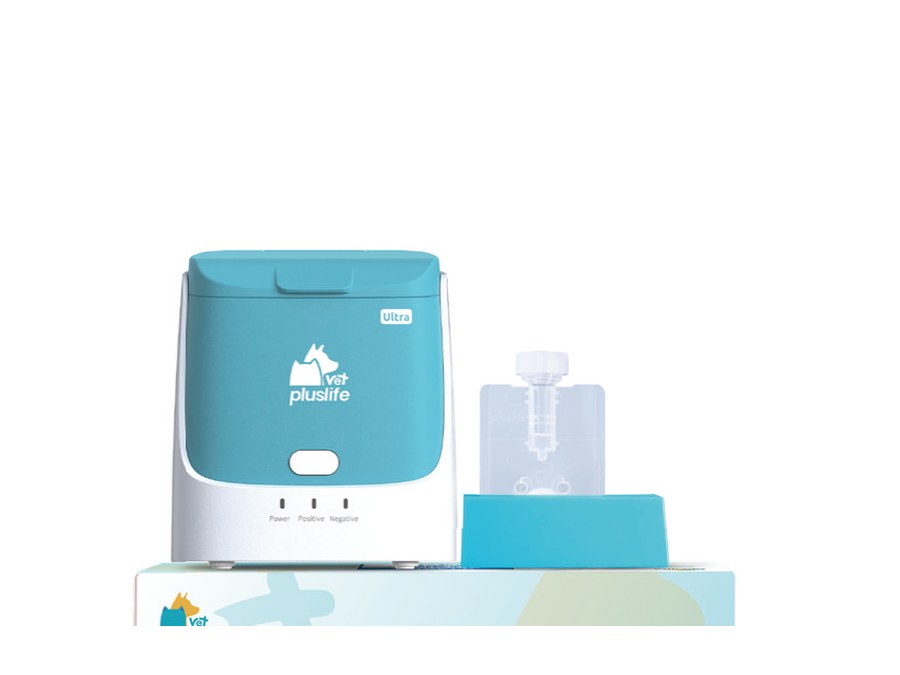
Giardia / Tritrichomonas foetus Nucleic Acid Test Card
Also called giardia molecular test · tritrichomonas foetus test · giardia test for dogs
Giardia / Tritrichomonas foetus Nucleic Acid Test Card is a sealed isothermal amplification test card for canine & feline patients (gastrointestinal). The card runs on the palm-sized MiniDock or the multi-channel Dock Pro and returns a nucleic-acid result in about 30 minutes, without a thermal cycler or a cold chain.
Specimen: Faeces / rectal swab. Supplied as Single-use card. One sample, one card, one dock: a nucleic-acid result before the owner leaves the room.
Wholesale and private-label supply to distributors, clinics and laboratories. Quotations within two working days.
Specifications
Catalogue data for Giardia / Tritrichomonas foetus Nucleic Acid Test Card. Registration status and package insert language differ by market; ask for the current version for your country.
| Catalogue number | ISO-GIA-TRF |
|---|---|
| Product line | Isothermal molecular cards |
| Method | Isothermal (RHAM) |
| Species | Canine & feline |
| Disease group | Gastrointestinal |
| Specimen | Faeces / rectal swab |
| Pack size | Single-use card |
| Result | ~30 min, cold-chain free |
| Platform | Runs on the palm-sized MiniDock; up to 6 pathogens per card |
How to order
- Send the catalogue number and quantity by the form, email or WhatsApp.
- Receive a consolidated quotation for this item and anything else in the catalogue.
- Trial order ships in 7 to 10 days; volume and private-label orders in 20 to 35 days.
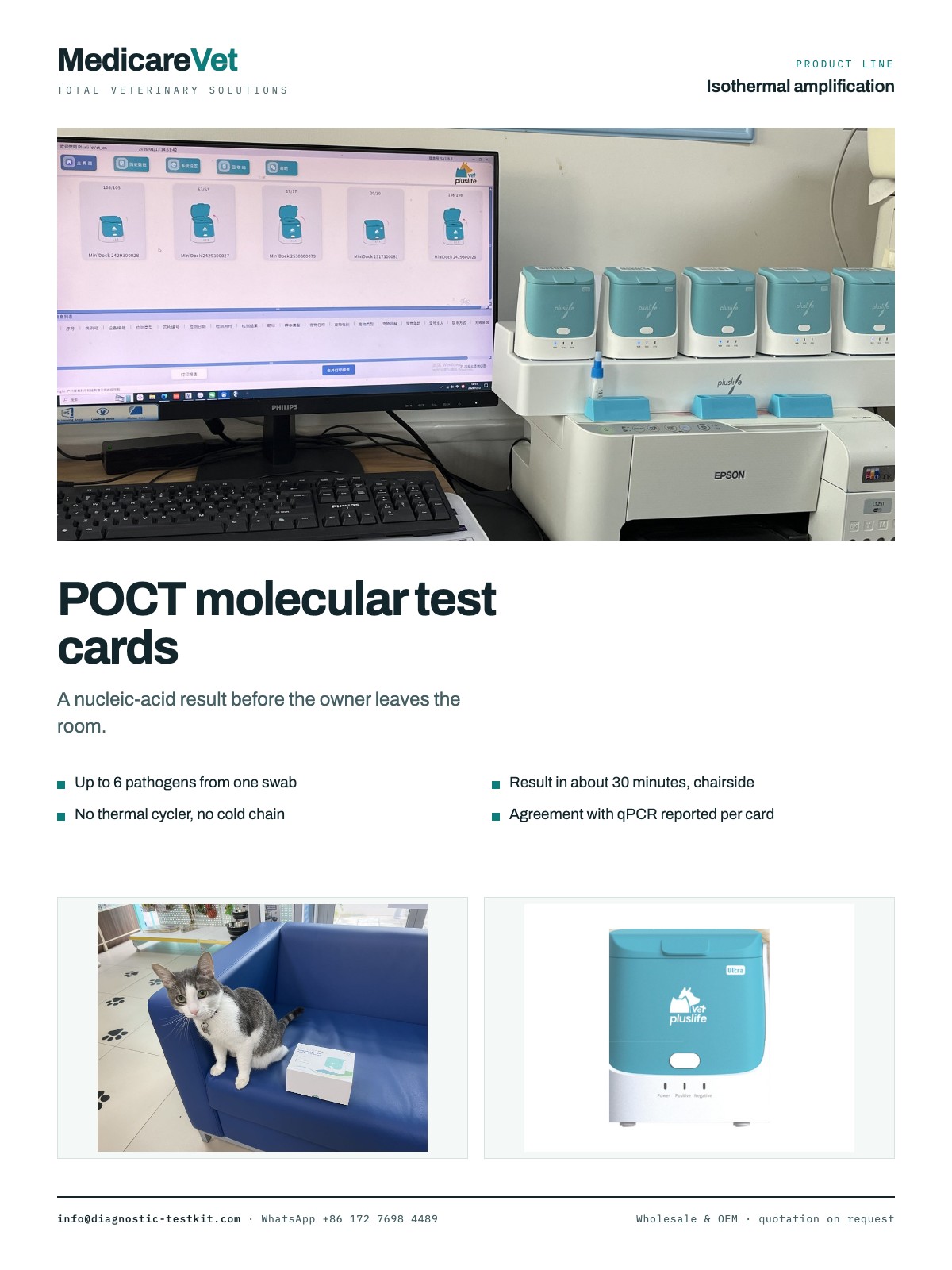
Further reading
Where this item sits in the range, and the technical note that explains the method behind it.
Questions about Giardia / Tritrichomonas foetus Nucleic Acid Test Card
Which instrument does this test card need?
The MiniDock (single channel, portable) or the Dock Pro (multi-channel). Both are listed under analysers; the card is not run on a conventional thermal cycler.
How does the result compare with laboratory PCR?
Performance differs by assay, so there is no single figure for the whole line. The independent studies we hold, some of them on single cards, are on the clinical trials page; ask us for the data on this card.
Does the card need refrigeration?
No. The manufacturer lists the reagent as free from cold chain, with cards stored at 2 to 28 °C.